

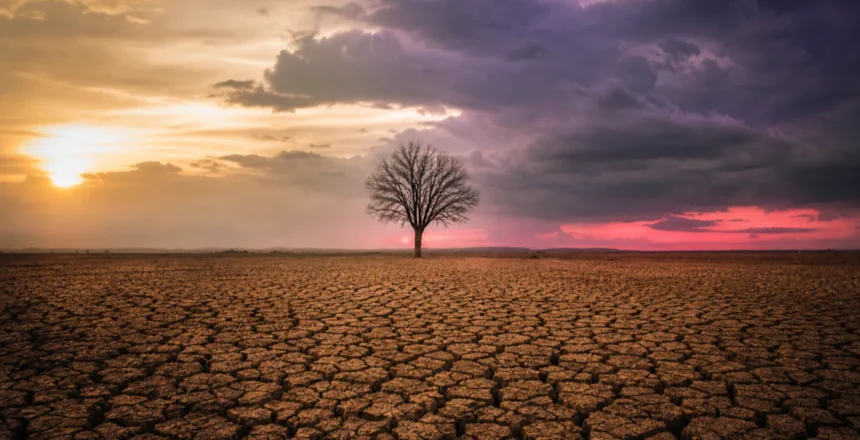
India waited all month for the rain — and for most of June 2026, it barely came. The southwest monsoon stalled, the country ran roughly 43% below its normal June rainfall, and core farming states like Maharashtra and Gujarat were left more than 80% short.
So the question on everyone’s mind is fair: is India heading towards a drought in Monsoon 2026? Here’s the honest answer — what the numbers actually say, why the rain went missing, and what a weak monsoon could mean for farmers, food prices and your monthly grocery bill.
⚡ Quick Take
- What’s happening: June 2026 was one of the driest in over a century — about a 43% all-India rainfall deficit, per IMD data reported by leading outlets.
- Why it matters: June–July is peak sowing season; rice planting is already running about 26% short.
- Is it a drought? Not officially declared. It’s a serious deficit — and what happens in July will decide everything.
What the Numbers Actually Say
Let’s start with the facts, not the panic. According to India Meteorological Department (IMD) data reported by BusinessToday and Outlook India, India’s June rainfall was running around 43% below normal by 22 June 2026 — making it one of the driest Junes in more than a century of records (one report went as far as calling it the driest June in 146 years for that window).
The pain wasn’t spread evenly. The worst-hit were exactly the states India can least afford to lose:
| State / Region | June rainfall shortfall (approx.) |
|---|---|
| Maharashtra | ~85% below normal |
| Gujarat | ~84% below normal |
| Madhya Pradesh (monsoon core zone) | ~58% below normal |
| All-India | ~43% below normal (to 22 June) |
And there’s a bigger flag: the IMD had already forecast a below-normal monsoon for 2026 — around 90% of the Long Period Average (LPA) — its first below-normal forecast in 11 years. So the dry June didn’t come out of nowhere.
Why Did the Monsoon Go Missing?
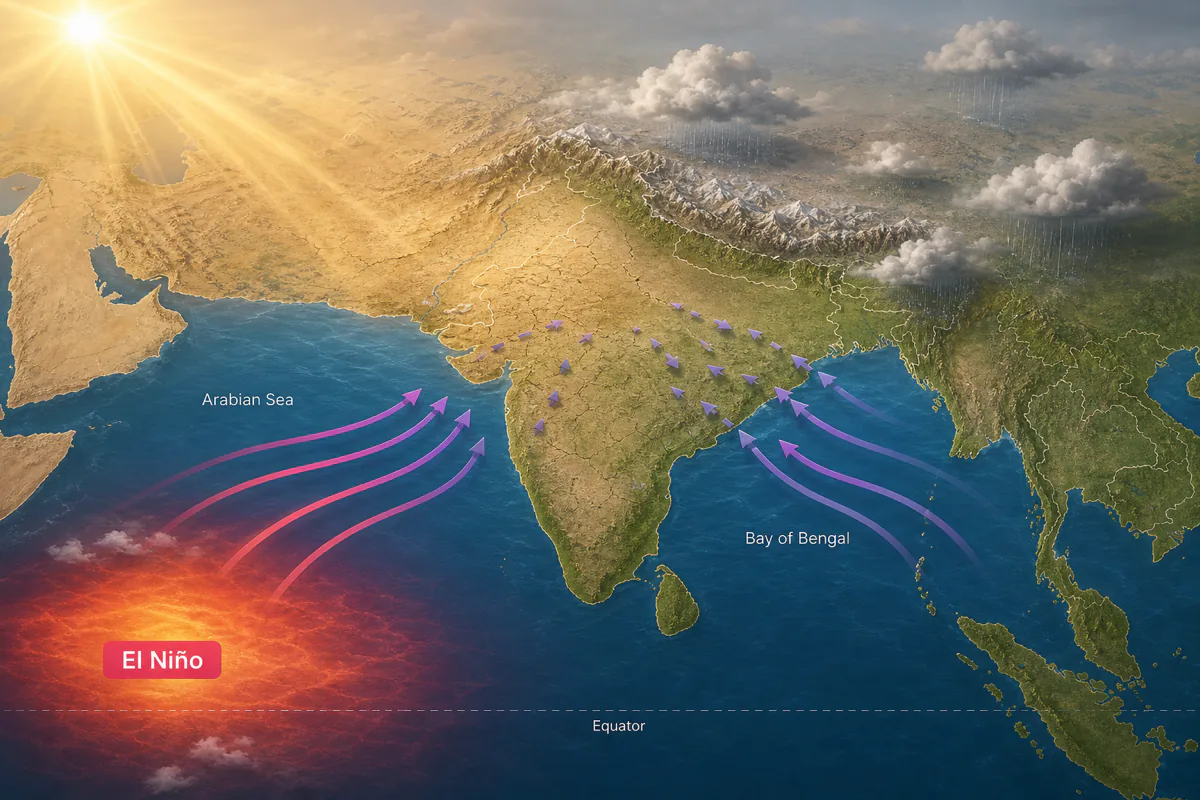
In plain English, several weather systems lined up against the rain at once. The big one is El Niño — a warming of the Pacific Ocean that the IMD says has set in, and which historically tends to weaken India’s monsoon. On top of that, IMD experts pointed to a cluster of reasons for the stall:
- A weak surge from the Arabian Sea and weakened southwesterly winds, cutting the moisture being pushed inland.
- Reduced cross-equatorial flow over the western Indian Ocean.
- An absence of low-pressure systems in the Bay of Bengal — the engines that usually drag the monsoon across the country.
- A weak Madden–Julian Oscillation (MJO) phase, which dampened cloud formation.
Translation: it wasn’t one villain, it was a whole gang — and together they kept the rain bottled up while South India sweated through what was reported as its hottest June since 1901.
What It Means for Farmers
This is where a dry June stops being a weather headline and starts being a livelihood problem. June and July are the heart of the kharif sowing season — when millions of farmers plant rice, maize, cotton, soybean and sugarcane, mostly depending on rain rather than irrigation.
The early damage is already visible: IndiaSpend reported that rice sowing was running about 26% behind this kharif season. Late or patchy rain can shrink yields, dent rural incomes, and force re-sowing — and the highest-risk zones are exactly the rain-fed belts of Northwest, West and Central India.
🔎 Reality check: A sowing deficit in June isn’t a crop failure. Farmers often catch up if July rains revive — Indian agriculture has bounced back from slow starts before. The worry is only if the dry spell continues into July.
What It Means for Food Prices & Your Daily Life
Here’s the part that hits your wallet. A weak monsoon doesn’t automatically spike prices, but the chain reaction is real: less rain → weaker sowing and yields → tighter supply of staples and vegetables → upward pressure on food prices. Analysts and outlets covering the season flagged that whether the monsoon recovers or the deficit deepens could shape the trajectory of food prices and rural incomes in the months ahead.
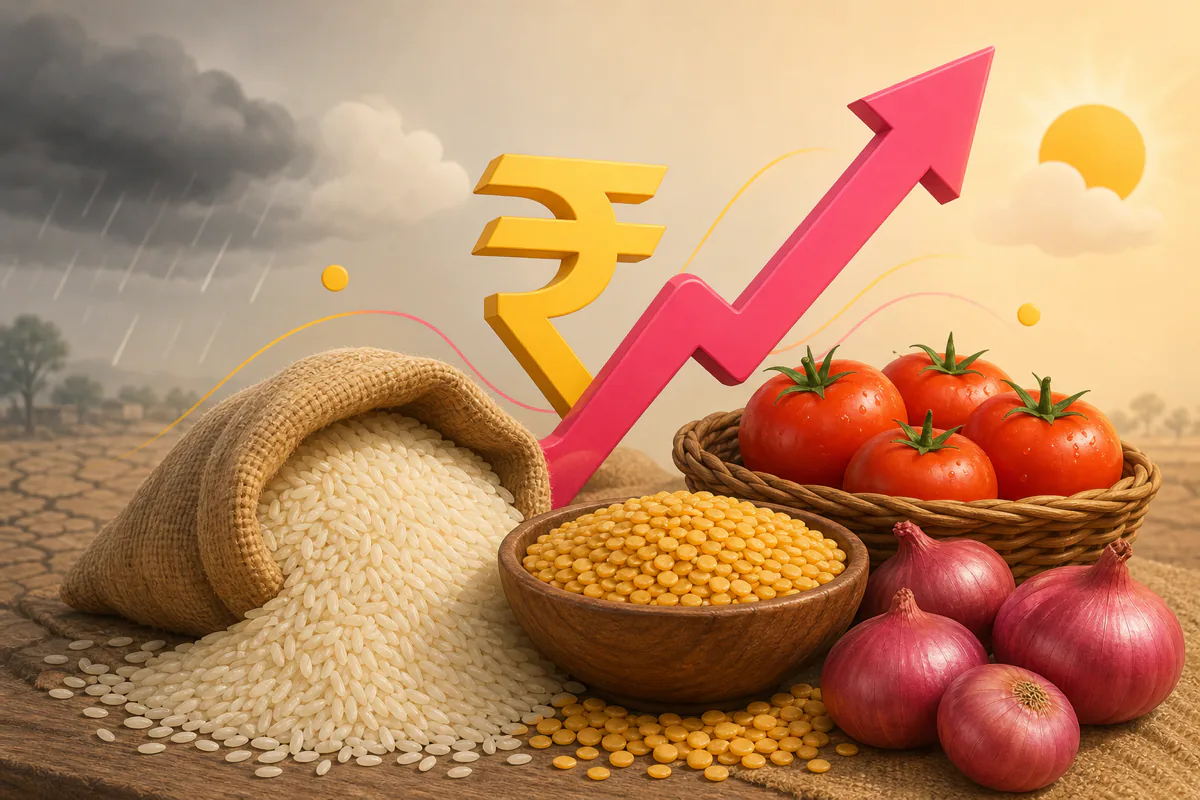
In everyday terms, the things most exposed to a poor monsoon are usually vegetables, pulses and rice — the items that move fastest on your kitchen budget. There’s a knock-on too: rural India is a huge chunk of the consumer economy, so a bad farm season can cool demand for everything from two-wheelers to FMCG. None of this is locked in — it’s the risk a weak monsoon puts on the table.
So… Is It Actually a Drought?
Short answer: not officially — at least not yet. “Drought” is a specific declaration based on rainfall, soil moisture and crop conditions over time, and no nationwide drought has been declared. What we have is a serious early-season rainfall deficit against the backdrop of an El Niño and a below-normal IMD forecast.
The honest bottom line: June set off real alarm bells, but the monsoon delivers most of its rain in July and August. A strong July revival can still rescue the season; a continued stall is what would tip “deficit” towards “crisis.” That’s the line to watch.
Frequently Asked Questions
Is India facing a drought in 2026?
Not officially. No nationwide drought has been declared. India did record a very dry June 2026 with roughly a 43% rainfall deficit, and the IMD has forecast a below-normal monsoon, but whether it becomes a drought depends on how the rains behave in July and August.
How much rain did India get in June 2026?
India was running around 43% below its normal June rainfall by 22 June 2026, according to IMD data reported by outlets like BusinessToday and Outlook India. It was one of the driest Junes in over a century of records, with Maharashtra and Gujarat more than 80% short.
Why was June 2026 so dry?
An El Nino set in, which tends to weaken India’s monsoon, alongside a weak Arabian Sea moisture surge, an absence of low-pressure systems in the Bay of Bengal, and a weak Madden-Julian Oscillation. Together these stalled the monsoon and kept the rain away through much of June.
Will food prices rise because of the weak monsoon?
They could, but it isn’t guaranteed. A weak monsoon can reduce sowing and yields, tightening supply of vegetables, pulses and rice and pushing prices up. Whether that happens depends on a July recovery — a good second half of the season can ease the pressure.
Can the monsoon still recover in July and August?
Yes. The monsoon delivers most of its rain in July and August, so a strong revival can still salvage the season even after a poor June. India has recovered from slow monsoon starts before, which is exactly why the July trend is the key thing to watch.
The Bottom Line
India isn’t in a declared drought — but a 43%-short June, an El Niño, and a below-normal IMD forecast are a genuine warning, not background noise. For farmers it means a nervy, delayed start; for the rest of us it means keeping an eye on vegetable, pulse and rice prices over the next couple of months.
Everything now hinges on July. A strong revival and this becomes a scare we forget by Diwali; a continued stall and “deficit” starts turning into “crisis.” This is a developing story — we’ll update it as verified IMD and government data come in.
Sources: IMD data as reported by BusinessToday, Outlook India, and IndiaSpend. Figures are as reported in late June 2026 and will change as the season progresses.